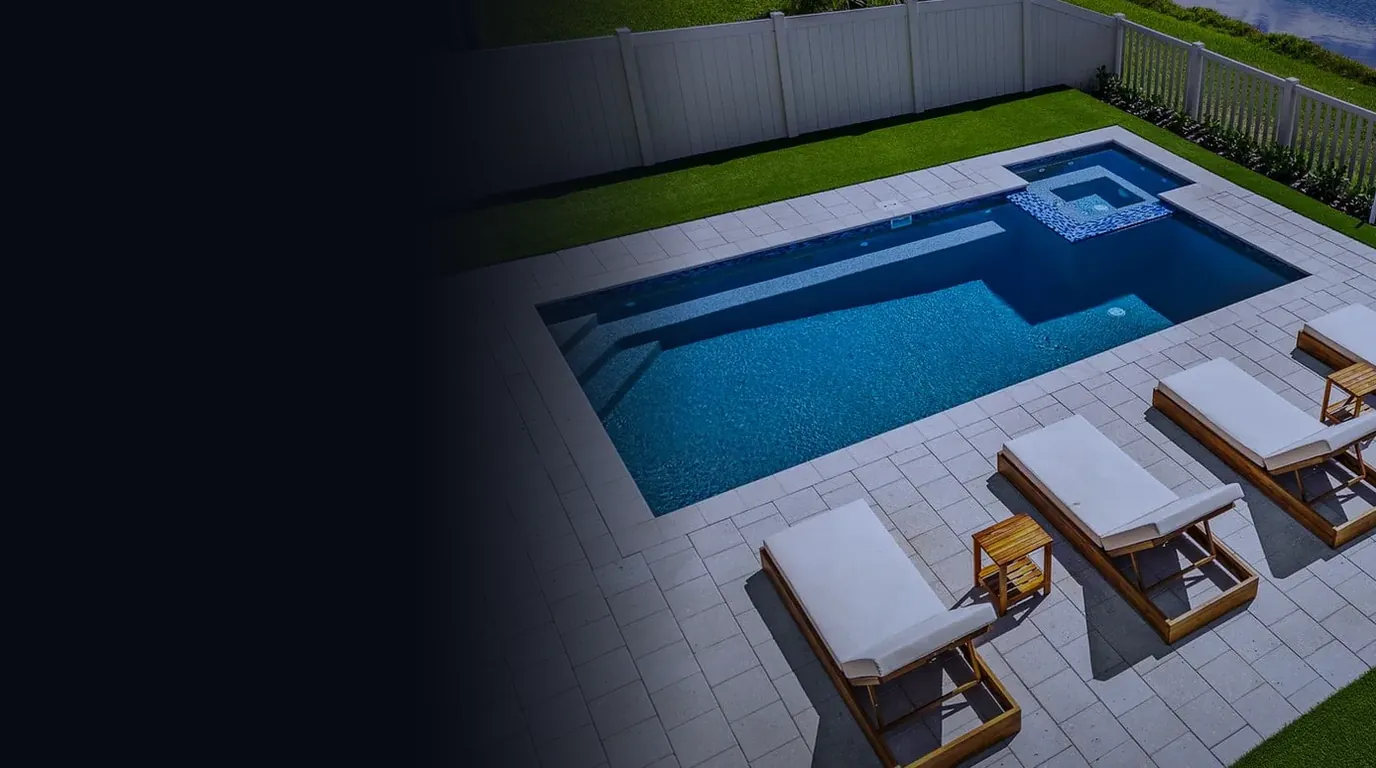
Answer the phone fast. Claim your Google listing. Put a sign in the yard. That's most contractor marketing advice, and for an emergency HVAC call, where the homeowner hires whoever picks up first, it's fair. For a $70K to $150K+ pool or outdoor living build, it's incomplete in ways that cost you real money.
A build that size is bought over about nine months, on trust, from a shortlist the homeowner made before they ever contacted you. That changes what you market, when you market it, and which numbers you hold anyone to, including us. We come at this from inside the business: Natan spent three years as Marketing Director at Pool Perfection in Tampa Bay, which is where most of the numbers below come from.
An agency wrote this, so we've made it something you can check.
What Contractor Marketing Means When the Job Is $70K to $150K+
Contractor marketing is the work of getting homeowners to book with you and sign. That covers two different jobs. One is a repair the homeowner needs soon, won by whoever is available and answers first. The other is a considered, high-ticket build, won by whoever the homeowner trusts enough to hand over their backyard for the next four months. Same label, different sport.
Outdoor kitchens and hardscape at that ticket size have the same trust problem. Pool building is the worked example because that's where our numbers come from, and we won't stretch a claim over trades we can't back up.
What the Tips Lists Get Right
Give the lists their due. Good reviews, a claimed Google Business Profile and fast follow-up still matter, and a builder missing them has bigger problems than a nine-month sales cycle. Fix those first. Just don't mistake them for the strategy. They're table stakes for a sale that takes most of a year.
Why Homeowners Choose a Pool Builder on Trust, Not the Lowest Quote
You know who's hiring you: someone about to hand over a chunk of their savings and a torn-up backyard for about four months. Every buyer type thinks hardest about that stretch, so they pick the company that feels most comfortable and safest, not the one with the lowest number. It's where our name comes from: the buyer should feel their builder is the authority in the market.
The Six Places Trust Comes From, and Why Ads Come Last
Buyers trust six sources, in this order:
- A neighbor's recommendation
- Seeing a finished pool in person
- Google reviews and photos
- An AI recommendation
- Organic search results
- Paid ads
Paid ads sit at the bottom because they start at zero trust. They do put you in the pile when a buyer is gathering names, so they aren't useless. But a name in a pile isn't a spot on the shortlist. Photos, reviews and content earn the spot. Ads convert the people already on it.
Why the Cheapest Quote Wins When It Shouldn't
Buyers can't see what a pricier quote includes. On paper, two quotes for the same yard look like the same job at different prices, so the cheapest number often wins when it shouldn't.
Then there's the lowball-then-upgrade quote. A competitor quotes basic materials to land the lowest number, say $110K against your $150K, then adds $20K to $40K in upgrades once the buyer is in the showroom. You lose the quote, and it's tempting to blame the marketing. It isn't a marketing problem. It's a comparison the buyer had no way to make.
In Florida the stakes are higher. Several pool companies have taken deposits and never finished the job, often after winning the work by being the cheapest. Buyers know it, so they're wary of big deposits, and being undercut on price is really a trust problem. A premium builder has to spell out what the extra money buys, in writing, before the buyer ever compares quotes.
The Nine-Month Buying Cycle, and Where Pool Deals Actually Stall
You know how a pool gets bought. The question is whether your marketing acts like it. The purchase takes about nine months, and the figure below shows the stages. What matters most happens early. During weeks of research, the buyer builds a shortlist of about three, and only then do they contact anyone.
Notice where you show up: after the shortlist is already made. It was made before you heard a word, on a phone at night, where nothing tracks it. Buyers compare two or three quotes, and the ones who collect five or six are the most price-sensitive.
Getting the lead means being confirmed, not discovered.
"That March inquiry is dead." It isn't. A March inquiry signing in September is normal, because buyers stall for reasons that have nothing to do with you: a house closing, money, a roof, a job change, a partner who isn't ready. Email retargeting, social posts and new project posts keep you in front of them while they sort it out.
Start with money. A HELOC takes 2 to 6 weeks to arrange, often exactly why your keenest buyer went quiet. Finance buyers compare the monthly payment, not the price: a $100K loan at 8.5% over 30 years runs about $769 a month. Put that monthly number in front of them.
The property survey is the quiet stall. Most homeowners don't know where theirs is, and a new one takes 5 to 10 days. A buyer who's stuck looks exactly like a buyer who lost interest. Permitting, the stall you can't control at all, comes up next.
When to Market a Pool: Awareness in the Fall, Signatures Before Spring
Sign in the fall, swim by summer. Permitting and approvals take months, so a buyer who starts looking in April is already behind. Awareness content works best from August to October, before the spring rush, while buyers are still building their shortlists.
The reason to start early is lead time. It isn't a discount, and we won't dress it up as one.
Permitting is the longest stage, it varies by city, and you can't speed it up. A rejection, say from an outdated survey, sends everything back through the redesign and resubmit loop.
One more thing before you turn anything on: match spend to what your crew and design team can meet. If you can only run four appointments a week, budget for four, not for whatever the platform will sell you. Our ad-spend post shows how to set the budget to what your design team can handle and work backward from there.
The Scorecard: Measure Appointments and Cost of Marketing, Not Leads
Start with what an appointment is worth. A $70K average job at a 30% close rate makes each appointment worth $21,000. That's an illustration, so swap in your own numbers, but the shape holds: a cheap lead that never books isn't cheap, and cost per lead measures the wrong end of the funnel.
The numbers worth watching are appointments, cost per appointment, show rate, pipeline value, and booking rate by channel. Over all of them sits cost of marketing as a percentage of revenue (COM%): everything you spend on marketing, ad spend and management included, divided by revenue. Clicks and impressions don't make the list. Signed contracts pay the bills.
Channels need different yardsticks. In our accounts, Google leads book around 56% and Meta leads around 45%. Google leads are searching today. Meta leads were scrolling. Don't judge the two against the same number, and don't follow up on them the same way. Anything at 45% or better is strong. From June 2025 to June 2026, Pool Perfection's Meta leads booked at 47%, against a 28% home services average.
Then there's the piece most agencies skip. Google calls it offline conversion import, which in plain words means sending appointments and signed deals from your CRM back to Google. Without it, Google optimizes for form fills. With it, Google optimizes for appointments that actually happen. The same import is what makes reporting on appointments and signed contracts by channel possible.
Fewer leads. More jobs.
Here's what that looks like on a real account. From June 1, 2025 to June 1, 2026, Pool Perfection's numbers were 950 appointments at $312.02 each, all-in, with a 2.16% all-in cost of marketing. That's about 18 appointments a week. All-in means ad spend plus management divided by revenue, not ad spend alone. Over three years, revenue grew from $10M to $15M+ with 100+ new projects.
The Six Real Reasons a Lead Is Bad
"Bad lead quality" is a catch-all that hides what's really going on. Once you get into what actually makes a lead bad, it comes down to exactly six things:
- A renter
- Outside the service area
- No address yet
- Wants a repair, not a new pool
- Budget too low
- An HOA that won't approve a pool
Everything else that gets called bad lead quality is usually slow follow-up or pricing. A lead called back the next morning isn't a bad lead. It's an unanswered one, which is why we check response speed first and audit client CRMs for it.
Two things look like lead problems and aren't. One is the lowball-then-upgrade quote from earlier. The other is rising interest rates. Lead volume holds steady while fewer buyers sign, because the same buyer can now afford less pool. It reads as a quality problem, but it's a financing problem, and builders end up blaming the agency for something the lender decided. Before you do, check what your buyers are being approved for.
What Good Marketing Looks Like for a High-Ticket Outdoor Contractor
With the scorecard set, the work follows the trust order from earlier: proof first, then paid reach, then qualification.
Real Project Photos Come Before Any Ad Spend
A good ad pointing at 8 photos does less than an average ad pointing at 80. Buyers scroll your Google Business Profile photos before they read a single review. Past 4.5 stars, photos matter more than reviews, because once everyone has good reviews, reviews only confirm you're reliable. Photos help you close, too: designers use them in the consultation so a buyer can picture a feature in their own yard. Real finished projects beat stock.
Ads That Name the City and Target People Who Live There
Pool building is local, needs permits and happens in person, so generic national-sounding copy does badly. Every ad should name the city or service area, and local search ads that name the city should target people located in your area, not people merely interested in it. Google's own documentation on location targeting explains the difference.
A few pool-specific rules. The word "pool" needs a big negative keyword list: pool table, jobs, DIY, above ground and more. Keep cost-research searches in their own campaign and judge them separately. Outdoor-kitchen shoppers are not pool prospects. And don't run Performance Max in month one.
Paid Social in Three Layers
Paid social in three layers works because each layer has one job. Build-timelapse video creates awareness. Retargeting follows the viewers with design ideas and financing. The third layer books consultations with a local offer. Skip the first two and the third is asking a cold audience to book.
Getting Named When Homeowners Ask an AI Tool
AI tools answer from what's written on your website. A builder who hasn't written out their process, pricing ranges and timeline usually doesn't show up at all. Showing up in AI search starts with a plain writing job: say what you do, roughly what it costs and how long it takes, in words a buyer would use.
Qualifying Homeowners Before the Design Consultation
Five questions before a consultation save your design team hours: do you own the home, do you have a property survey, where are you located, what's your budget, and will both partners be there. Right after the form is submitted, a short video explains why the survey matters, which handles the survey stall from earlier at the front door instead of mid-deal. And every website we build ships with ad tracking set up from day one.
Oasis Outdoor Living, a Tampa outdoor kitchen builder, is our clearest outdoor living example. The work was great, the online presentation wasn't, and they had no way to measure return. We rebuilt the website, refreshed their social, made better ad creative and put tracking in place. Monthly revenue doubled within three months, cost per appointment dropped 26%, and they added $500K in revenue. Jake P. of Oasis put it this way: "You guys have been killing it... we are seeing so much more of a rapport than we have seen in our whole careers."
How to Choose a Contractor Marketing Agency (Including Us)
Search for the best contractor marketing agencies and you'll find plenty of ranked lists, several published by an agency that puts itself at number one. We're an agency too, so a ranking from us would be worth just as little. Instead, here are six questions to ask on the sales call. Ask them of anyone, us included.
Does the agency specialize in your industry? Ours works only with pool and outdoor living contractors. An agency that also serves plumbers and dentists learns your nine-month buyer on your budget.
Will it work with only one builder per market, so your leads never go to a competitor down the road? We do, and we turn away competitors in any market we already serve. For the record behind that promise: 100% client retention, more than $30M in contractor revenue influenced, and the Pool Perfection numbers above.
Is it scored on appointments and signed contracts, not lead volume? If the monthly report leads with lead counts, it's measuring the wrong thing. Is reporting open, not a black box? You should see spend, appointments and signed contracts by channel without asking.
Is the contract short? Ours is three months at the start, then month to month, and leads usually start in the first week. And do you own the ad accounts, pixels and data? You should. If the agency leaves and takes them along, you're rebuilding from scratch.
A word on fit. We work only with high-ticket custom builders. If you compete on the lowest number in your market, we're the wrong call: a trust-based approach doesn't work when price is your pitch, and we'd rather tell you now than take your money. The full list of what we run is on our contractor marketing services page.
What to Fix in Your Marketing Before the Spring Rush
Get your project photos and Google Business Profile right. Measure appointments and COM%, not lead count. Set up offline conversion import so Google learns from real appointments. And start awareness in the fall, before the spring rush. If you hire us to do it, the deal is simple: measure, optimize, or fire us.
Frequently Asked Questions About Contractor Marketing
Contractor marketing is the work of getting homeowners to book appointments with a contractor and sign contracts. It splits in two: emergency and repair trades, where the fastest responder wins, and high-ticket builds like pools, where trust decides. Those two need different tactics and different numbers. It's also not the same thing as a marketing contractor, which is a freelancer hired on contract to do marketing work.
Start with real photos of finished projects and a strong Google Business Profile, then layer on local search ads and paid social that name the city. Track every appointment and signed contract back to its source. Photos and local proof get you on the buyer's shortlist, and ads and follow-up convert the people already on it.
Name your city or service area in every ad, show real finished projects instead of stock, and qualify homeowners before the appointment. Ask whether they own the home, have a survey, where they live, their budget, and whether both partners will attend. That keeps your design team's calendar full of buyers who can actually sign.
We won't rank agencies, because a list published by an agency is hard to trust, including ours. Use six questions instead. Does it specialize in your industry, offer one builder per market, score on appointments and signed contracts, report openly, keep contracts short, and let you own your ad accounts, pixels and data? Apply them to every agency you talk to, us included.
Leads usually start in the first week. Signed contracts follow the buyer's cycle, up to about nine months from first thought to signing, so a March inquiry signing in September is normal, not a dead lead. Financing, property surveys, permitting and partner readiness cause most of the wait. Stay visible meanwhile with email, social posts and new project posts.
Six things: a renter, someone outside your service area, someone with no address yet, someone who wants a repair rather than a new pool, a budget that's too low, or an HOA that won't approve a pool. Anything else is usually slow follow-up or pricing. A lead called back the next morning isn't bad, it's just been left waiting.
Work from capacity and results, not a flat percentage. Set spend to the appointments your team can meet, as in our guide to how much a pool builder should spend on ads, then judge it by cost per appointment and COM%, everything you spend on marketing as a share of revenue.